
Wellness Beyond the Spa
Designing for How People Actually Feel | Ch.18

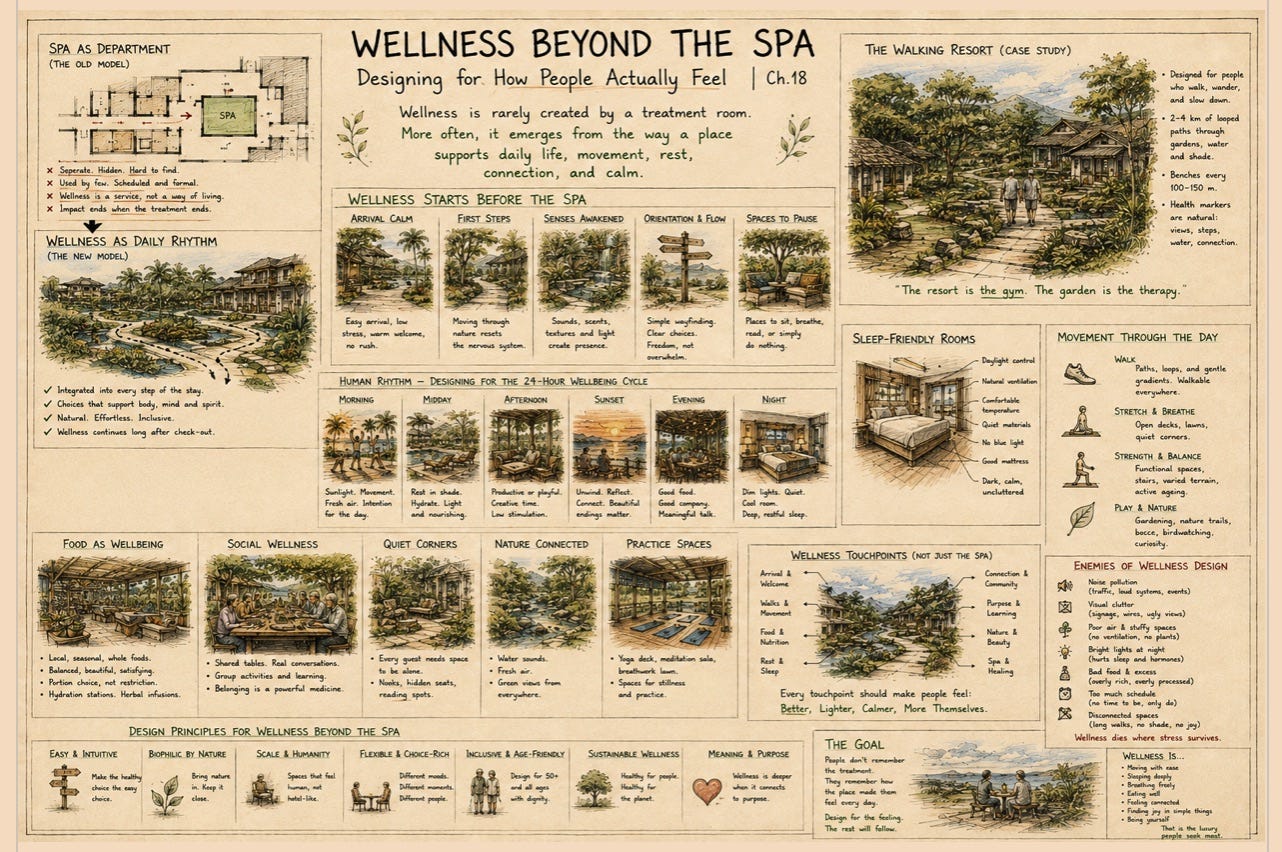
For many years, wellness in hospitality meant one thing.
A spa.
A few treatment rooms.
A massage menu.
Perhaps a yoga pavilion if the budget allowed.
Today, guests are looking for something different.
They are not simply seeking treatment.
They are seeking balance.
Energy.
Sleep.
Connection.
Movement.
Calm.
The future of wellness is not a department.
It is the way an entire place feels.
Wellness Starts Before the Spa
Guests begin forming impressions long before they reach a treatment room.
The arrival experience.
The noise level.
The quality of light.
The ease of movement.
The feeling of safety.
The ability to slow down.
All influences well-being.
A resort can have a beautiful spa and still feel stressful.
Likewise, a simple property with no formal wellness facilities can leave guests feeling restored.
Wellness begins with experience, not equipment.
Designing for Human Rhythm
Most people live highly structured and highly stimulated lives.
Constant notifications.
Traffic.
Meetings.
Deadlines.
Noise.
A successful resort creates a different rhythm.
Not by forcing guests into a programme.
But by creating opportunities for better habits.
Morning walks.
Natural daylight.
Healthy food choices.
Outdoor movement.
Quiet corners.
Spaces for conversation.
Spaces for solitude.
The goal is not to tell guests how to live.
It is to make healthier choices easier.
“The best wellness programmes often feel like ordinary life done exceptionally well.”
Wellness Through Environment
Buildings influence behaviour.
So does landscape.
Natural ventilation improves comfort.
Trees provide shade and calm.
Water softens sound.
Walking paths encourage movement.
Views reduce stress.
Comfortable seating encourages connection.
The most effective wellness design is often invisible.
Guests simply feel better without necessarily knowing why.
Food as Wellbeing
Wellness is not about restriction.
It is about nourishment.
The strongest hospitality concepts avoid turning healthy eating into punishment.
Fresh ingredients.
Balanced menus.
Local produce.
Flexible choices.
Simple food prepared well.
Guests should leave feeling energised rather than deprived.
Wellness succeeds when it feels sustainable.
Not temporary.
The Social Side of Wellness
Human beings need connection.
Many wellness programmes focus heavily on individual treatments while ignoring community.
Shared meals.
Group activities.
Learning experiences.
Casual conversations.
Meaningful encounters.
These contribute to wellbeing as much as many formal treatments.
Loneliness is often a larger problem than stress.
Good hospitality can help address both.
Case Study — The Walking Resort
A resort in Southeast Asia chose not to invest heavily in large wellness facilities.
Instead, it focused on pathways, gardens, outdoor seating, healthy dining, and daily movement opportunities.
Guests naturally walked more.
Spent more time outdoors.
Slept better.
And reported higher satisfaction levels.
The lesson was simple:
Wellness does not always require specialised facilities.
Sometimes it requires better environments.
The Enemies of Wellness Design
Over-programming.
Complicated wellness jargon.
Treatments disconnected from daily life.
Fitness spaces nobody wants to use.
And wellness concepts designed for marketing rather than people.
The goal is not to impress guests.
It is to help them feel better.
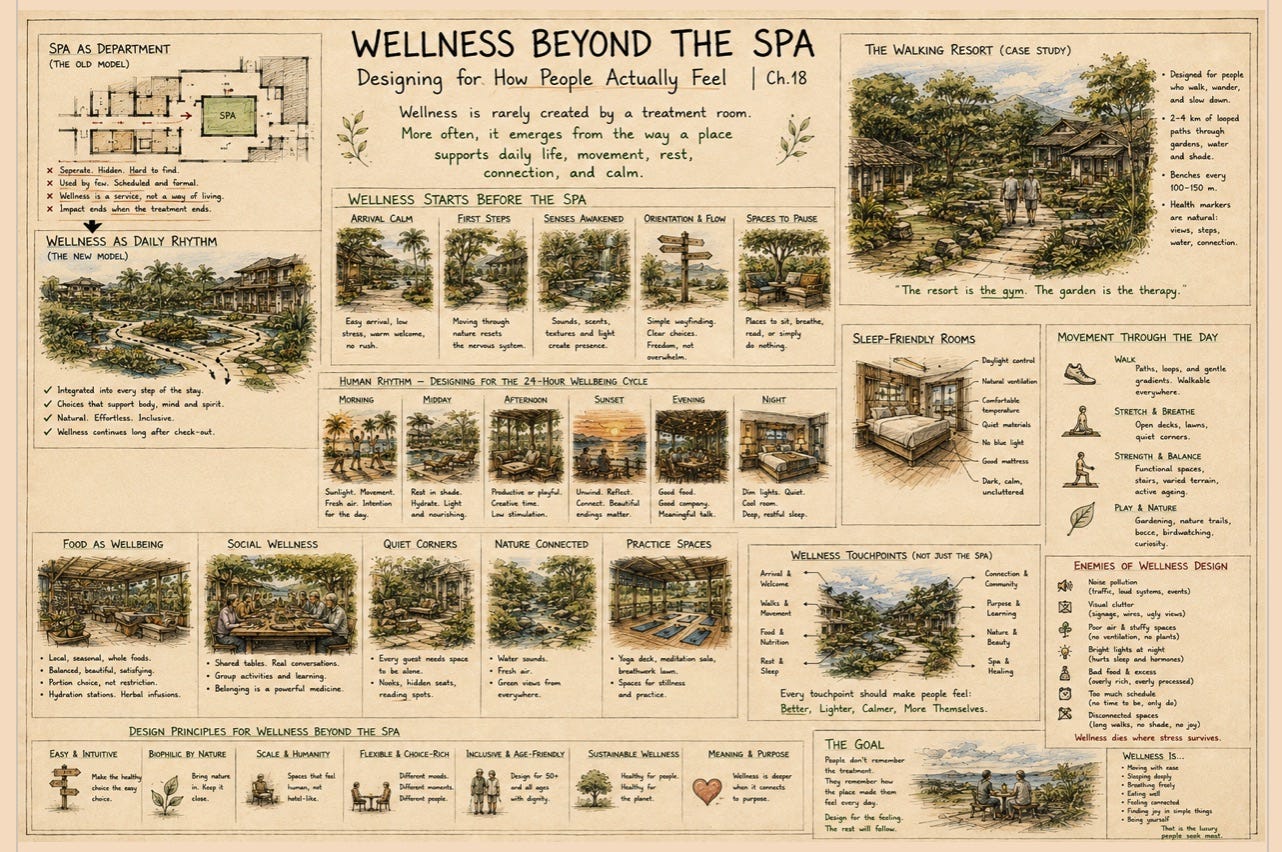
Wellness is rarely created by a treatment room. More often, it emerges from the way a place supports daily life, movement, rest, connection, and calm.
Closing Thought
The future of wellness extends far beyond the spa.
Guests increasingly seek places that help them sleep better, move more, eat well, connect meaningfully, and slow down.
The resorts that understand this shift will create something more valuable than a wellness programme.
They will create a healthier way of living.
Coming Up Next:
Landscape as Experience
The Resort Begins Outside the Room | Ch.19